
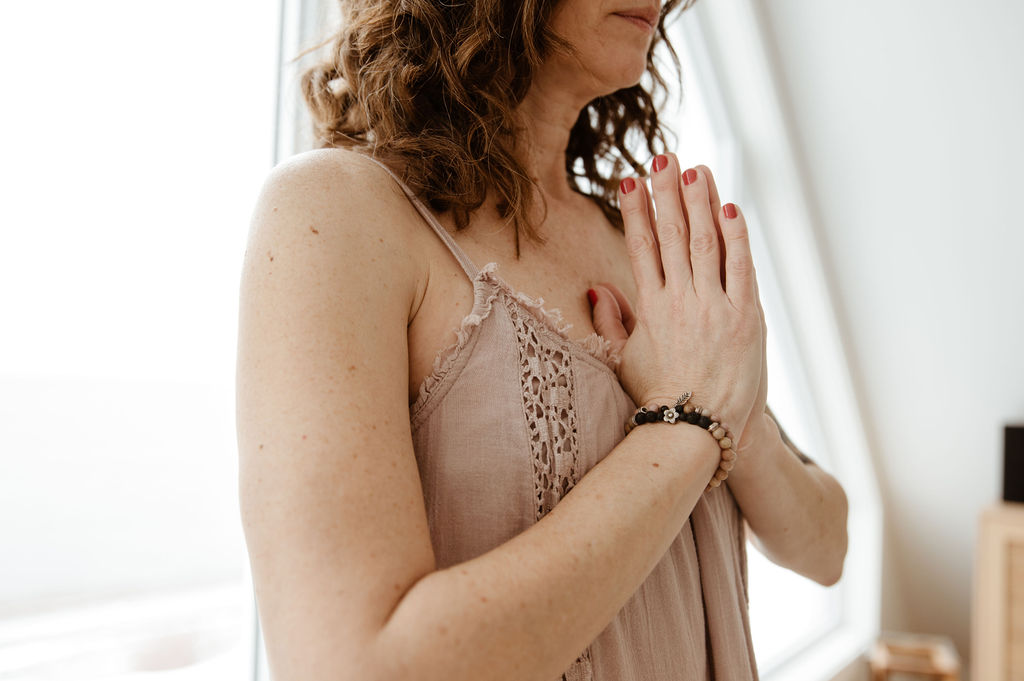
When I started teaching yoga to high school students, I was uncertain about best practices for ending the class. Should I stick with namaste, the closing from classes I’ve gone to for years? Or would that be cross over into cultural appropriation? I scoured the internet for advice, reading article upon article that advised for or against. Eventually, I came to a decision: If there was a risk that offence could be taken by even one student, it wasn’t a risk I was willing to take.
I’ll be honest: Even now, ending a class with anything other than namaste feels awkward and incomplete, so ingrained has it become from my personal practice. But I have found some alternatives that I find work quite well.
1. End with gratitude
Ask students to think of something they are grateful for in that moment. I let them know it can be something really small, like the pose that worked out well today; or something bigger, such as a mark on a test. Sometimes I’ll suggest they think of a moment they enjoyed on the weekend, or something they are looking forward to. I don’t ask them to share these thoughts of gratitude – I feel they will be more honest with themselves if they don’t have to tell it to the class.
2. hands on heart
Have them place one hand over the other over their heart space. I encourage students to notice the feeling of their hands on their chest, the feel of their heartbeat, the rise and fall of their chest as they breathe. This mindful practice helps develop self-awareness, and offers a way to give ourselves a little love at the same time.
3. Peace, peace, peace
A practice that I’ve learned from the local yoga studio that can also work in schools is to end the class with a mantra. One example is Om, shanti, shanti, shanti, Sanskrit for peace, peace, peace. It is a gentle reminder to approach our day with kindness.
4. Thoughts, words, actions
More often than not, I do end class with hands to heart in prayer pose, anjali mudra. I’ve explained to students the symbolism of this – that in India it is a greeting, that there is a connection to reverence or offering, that it represents union of the two sides of the body – and that it helps us to feel centered and focused. Rather than bowing to each other, I ask them to bring their hands to their forehead for kind thoughts, to their mouth for kind words, and to their heart for kind actions. I’m not certain of the origin of this practice, but it is one I have enjoyed in my own practice, and feels meaningful to students.
5. create an intention
At times, I’ll suggest to students at the start of class to make an intention for their practice. Then, when we close, I’ll ask them to make an intention for the rest of their day. I give a few examples, such as, “Today I will be kind to myself,” or “Today I will try to be patient.” It is a positive way to take the practice of yoga off the mat and supports the philosophy that I include as part of my teaching.
6. Hands over eyes
This is another one I learned from one of my own teachers: Have students place their hands together and create heat and energy by shifting the palms back and forth against each other. Then, I ask them to open their palms over their eyes. (Some will close their eyes, but many of my students are uncomfortable doing this, so it works with eyes open softly, too.) I ask them to notice the heat from their hands, to notice the sensations in their hands and on their eyes. I tell them it is a reminder of the energy we create, of the energy we share.
7. Hands on heart and belly
A take on 3-part breath, I place one hand on my abdomen and the other on my chest and ask students to do the same. At this point in the practice, I don’t teach a breathing exercise; I simply ask them to notice: Notice the rise and fall of their chest and belly as they breathe. Notice the sensations in the hands and the body. I remind them to treat themselves with care.
8. Self-hug
When I teach a restorative class, I usually end with this one, but it can work for any practice. It is exactly what it sounds like: giving yourself a hug. We wrap our arms across our chest and squeeze. I even have students give their shoulders and upper arms a little self-massage. I tell them this is something they can do anytime – that we don’t have to wait for someone else. We can give ourselves some care and compassion whenever we need it.
It’s been a couple of years since I started teaching yoga. I’ve learned a lot – and continue to learn. This year I’ve had the good fortune to teach a student from India and have been able to tap into her experience. In her practice, her family opens and closes with namaste. This has helped eased some of my uncertainty around the use of the word in North America, but I continue to remain prudent and open to learning.
In my experience, the practices above have found a happy middle ground. I hope you’ll find them to be helpful, too.
Thanks for reading.
💛 Dawn


Leave a Reply